
Bluetongue – stay vigilant
Bluetongue virus continues to be a concern for livestock keepers, so please remain vigilant and keep a close eye on your sheep and cattle.
Bluetongue is mainly spread by biting midges and is a notifiable disease. It can affect sheep, cattle, goats, deer and camelids.
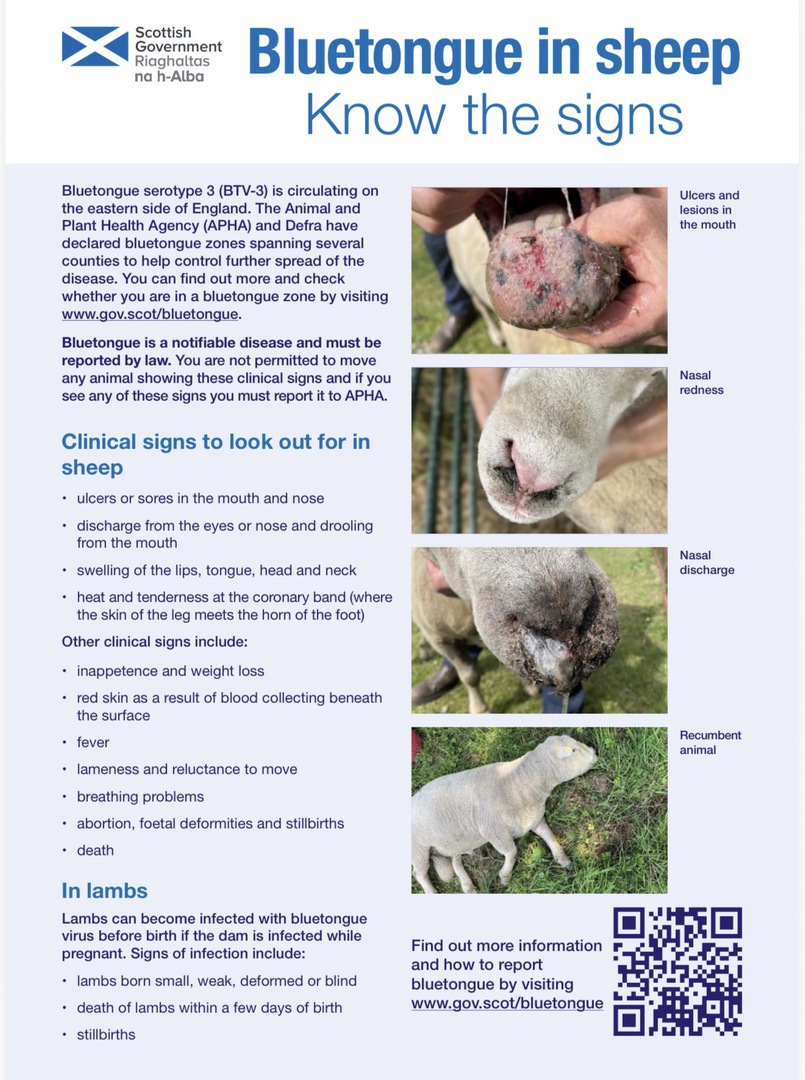
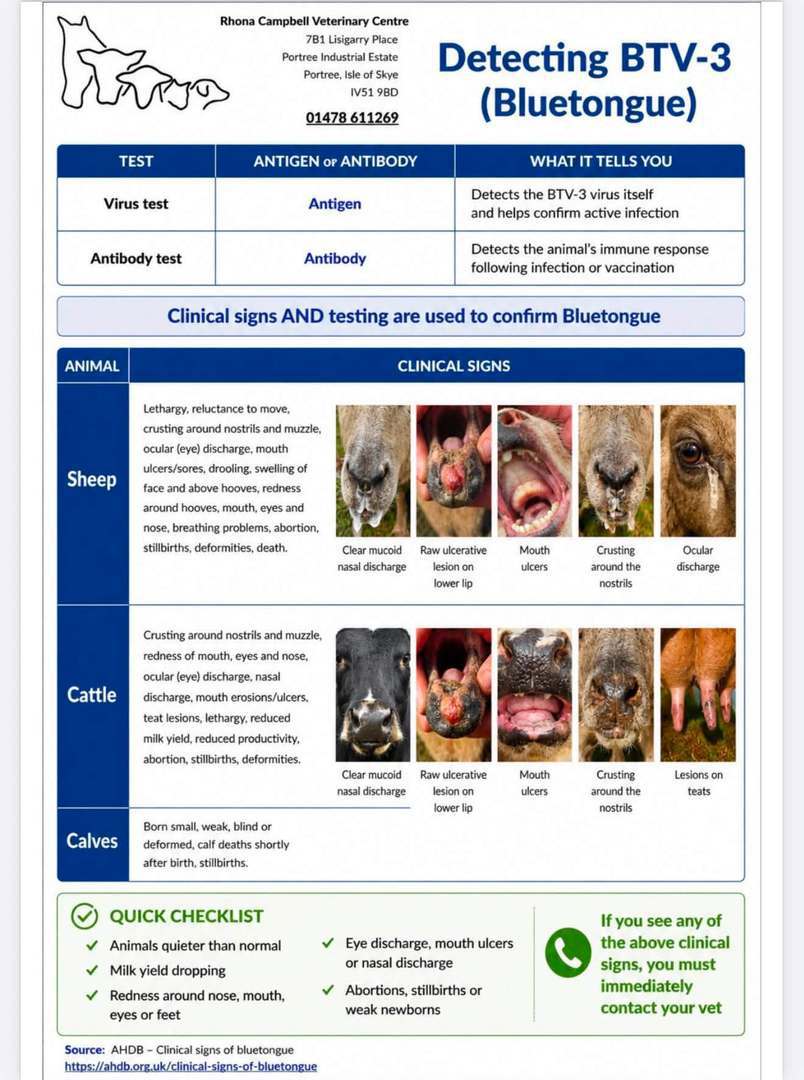
Signs to look out for in sheep include:
· Sores or ulcers in the mouth and nose
· Drooling or discharge from the eyes or nose
· Swelling of the lips, tongue, head, neck or around the feet
· Fever and lethargy
· Lameness
· Breathing difficulties
· Abortion, stillbirths or weak/deformed lambs
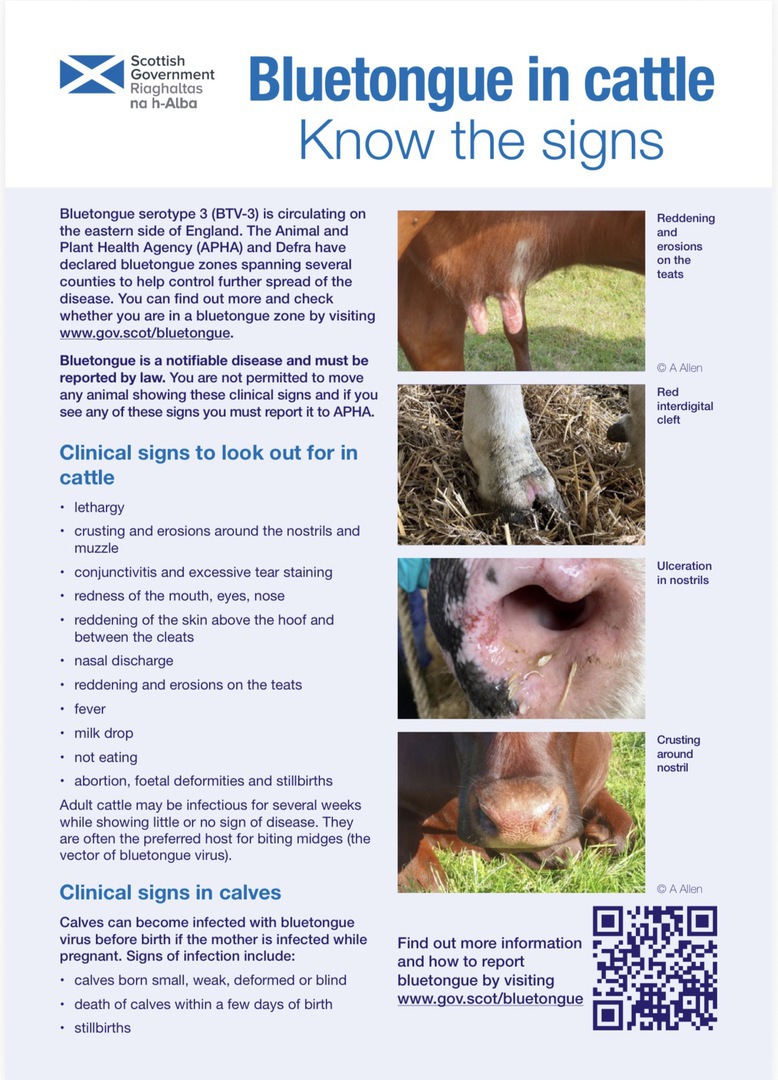
In cattle, signs can include:
· Lethargy and fever
· Nasal discharge or crusting around the muzzle
· Redness of the mouth, eyes, nose or above the hoof
· Erosions on the teats
· Reduced appetite or a drop in milk yield
· Abortion, stillbirths or deformed calves
Some infected cattle may show few or no obvious signs, so continued vigilance is important.
If you have concerns please contact the practice.
For the latest information on bluetongue, including current restrictions and guidance, visit the official GOV.UK guidance: https://www.gov.scot/publications/bluetongue/pages/clinical-signs/
Early recognition and reporting can help protect your animals and limit the spread of disease.
Bluetongue Update – Protecting Your Livestock
Bluetongue – Scotland Update
28 August 2026
Bluetongue virus serotype 3 (BTV-3) continues to be detected in South West Scotland.
There are currently 10 confirmed affected holdings in Scotland, with 11 sheep and 59 cattle testing positive for BTV-3. All confirmed holdings are currently located in Dumfries & Galloway.
Confirmed cases have been identified in the areas of:
- Kirkcudbright
- Lockerbie
- Dalbeattie
- Castle Douglas
- Newton Stewart
The first Scottish case of the current 2026/27 outbreak season was confirmed on 8 August, and further cases have subsequently been identified across the area.
Temporary Control Zone
A Temporary Control Zone (TCZ) remains in place across an area of South West Scotland, covering parts of Dumfries & Galloway and surrounding areas.
The TCZ was introduced as a precautionary measure following the detection of BTV-3 in the area. Movement of cattle, sheep and other susceptible livestock into, out of or within the zone is subject to specific movement controls and licensing requirements.
Keepers whose premises are within the TCZ should check the specific requirements before arranging any livestock movement. A number of general licences are available depending on the type and destination of the movement.
Movement restrictions
Movement controls also remain in place for susceptible livestock moving between Scotland and Bluetongue Restricted Zones in England, Wales, Northern Ireland and the Isle of Man.
From 22 August, Scottish livestock travelling to a show or market within a Restricted Zone must return to Scotland on the same day, with animals unloaded after sunrise and loaded before sunset.
Further changes to the movement rules are due to come into effect from 10 September 2026. These include changes to vaccination requirements for animals moving from the Scottish TCZ to the BTV-3 free area of Scotland. Following the latest review announced on 28 August, store, fattening and non-pregnant female animals will no longer require vaccination to leave the TCZ from 10 September, although some breeding animals will still require vaccination and testing.
The situation remains under review and movement requirements may change as the disease situation and weather conditions develop.
Farmers planning livestock movements are advised to check the latest requirements before arranging transport.
For further information, including the TCZ map, affected areas, movement licences and current restrictions, please visit -
Gov - https://www.gov.scot/publications/bluetongue/pages/latest-situation/
Case Map - https://experience.arcgis.com/experience/4867f4e1f680415898482df7aabb703d
Bluetongue has now been confirmed in Scotland
The bluetongue situation has changed, with the first confirmed cases of Bluetongue virus serotype 3 (BTV-3) in Scotland during the current 2026/27 season.
As of 13 August 2026, two cases of BTV-3 have been confirmed in Scotland, with the first new Scottish case confirmed on 12 August in a sheep following reports of suspicious clinical signs. Both Scottish cases are in Dumfries and Galloway. Across Great Britain, there have now been 373 confirmed cases during the current season, including 362 in England, 9 in Wales and 2 in Scotland.
Bluetongue is a notifiable viral disease affecting ruminants including sheep, cattle, goats and deer, as well as camelids. It is primarily spread by biting midges, and we are now in a period of increased risk for transmission.
What signs should you look out for?
Clinical signs can include:
- Fever and lethargy
- Swelling of the head and face
- Excessive salivation and drooling
- Crusting, ulcers or sores around the mouth and muzzle
- Nasal discharge
- Lameness
- Reduced appetite
- Abortion and reproductive problems
- In severe cases, death
If you see signs that could be consistent with bluetongue, please contact us promptly. Suspected cases should also be reported to the Animal and Plant Health Agency (APHA).
Vaccination
Cases of bluetongue are expected to continue rising and peak in September. The best way to protect your sheep and cattle is by vaccinating them. The vaccine is given in 2 doses, 3 weeks apart and immunity is reached 3 weeks after that. There is a current shortage of vaccine in the UK but we have managed to source a supply.
**Please contact us ASAP if you would like to order!**
Stay Vigilant
With confirmed cases now present in Scotland, it is more important than ever to remain vigilant for signs of bluetongue and to consider the measures available to protect your livestock.
For the most up-to-date information, including confirmed cases, current risk levels, control zones and movement requirements, please refer to the GOV.UK Bluetongue: latest situation page - Bluetongue: latest situation - GOV.UK
The APHA Bluetongue Case Map also provides an up-to-date map showing the location of premises in Great Britain where one or more animals have tested positive for bluetongue by PCR.
Latest official information:
APHA Bluetongue Case Map: The latest case map is available via the GOV.UK bluetongue situation page - Bluetongue Cases and Zones
If you have any concerns about bluetongue, livestock movements or vaccination, please contact the practice.
Contact
Rhona Campbell Veterinary Centre
7B1 Lisigarry Place
Portree
Isle of Skye
IV51 9BD
Email: rcampbellvet@gmail.com
Phone: 01478 611269
For out of hours emergencies please call:
01478 611269
Mon - Fri: 9am - 6pm
Weds: 9am - 12.00pm
Sat: 9am - 12.00pm
Consultations with the Vet are through appointment only, please call to arrange.
If you think your animal needs urgent attention please phone first and we will do our best to see you.
 Share
Share Print
Print 